
AI: A Meeting Planner’s Best Friend
“AI is transforming event planning across several areas. New venue sourcing platforms use AI to match event needs with hotel properties based on availability, pricing, amenities, and historical RFP response rates, though a professional sourcing partner still adds human verification and negotiation support AI can’t provide. Tools like ChatGPT, Otter.ai, and Fireflies.ai automate agendas, transcription, and post-event reports; a BizBash guest column notes AI can eliminate up to 40% of repetitive planning tasks. AI-driven platforms also personalize attendee experiences using registration data and real-time inputs. AMI Magazine recommends starting with a specific pain point rather than adopting broadly, choosing from categories like content assistants, scheduling automation, analytics, and transcription tools. Planners should verify any AI tool’s data handling practices against GDPR, CCPA, and organizational privacy policies before processing attendee data.”

Cost Savings Strategies for Meetings and Events
“Rising labor costs, supply chain disruptions, energy prices, and demand are driving up event costs in 2026. Conference Planning Services outlines five cost-saving strategies: choose destinations in low-tax states like Oregon, Montana, or New Hampshire and leverage CVB incentives; negotiate multi-year bookings, waived resort fees, and free WiFi or parking concessions; simplify catering menus, track meal participation, and limit alcohol service through drink tickets or a beer-and-wine bar; reduce AV costs by bringing your own equipment, limiting live streaming, and working with a competitively priced third-party AV provider; and choose accessible, drivable, or airport-adjacent locations to lower attendee travel costs and boost participation.”

Planning Conferences & Meetings in Uncertain Times
“Event planners today face rising cancellations, travel restrictions, climbing costs, staffing shortages, and safety concerns all at once. Conference Planning Services addresses each with contingency clauses and backup venue shortlists for cancellations; flexible attrition clauses and hybrid attendance options as policy shifts affect turnout; vendor relationships to offset rising costs; staff turnover research to protect the guest experience; and destination safety vetting with pre-event security walkthroughs.”

Planning Events with Confidence in 2026
“Event professionals navigated a volatile 2025 shaped by tariffs, supply chain issues, and travel policy changes. GBTA’s October 2025 Outlook Poll shows rising optimism in business travel, up from 28% to 43% between June and October 2025. Conference Planning Services outlines three strategies for 2026: (1) design modular, flexible event formats with adaptable venue contracts and decentralized regional hubs; (2) build attendee trust through transparent refund, safety, and accessibility policies with clear cost breakdowns; and (3) turn disruption into innovation using AI-driven personalization, bleisure travel support, and wellness programming.”
Practical Ways to Reduce F&B Costs at Conferences
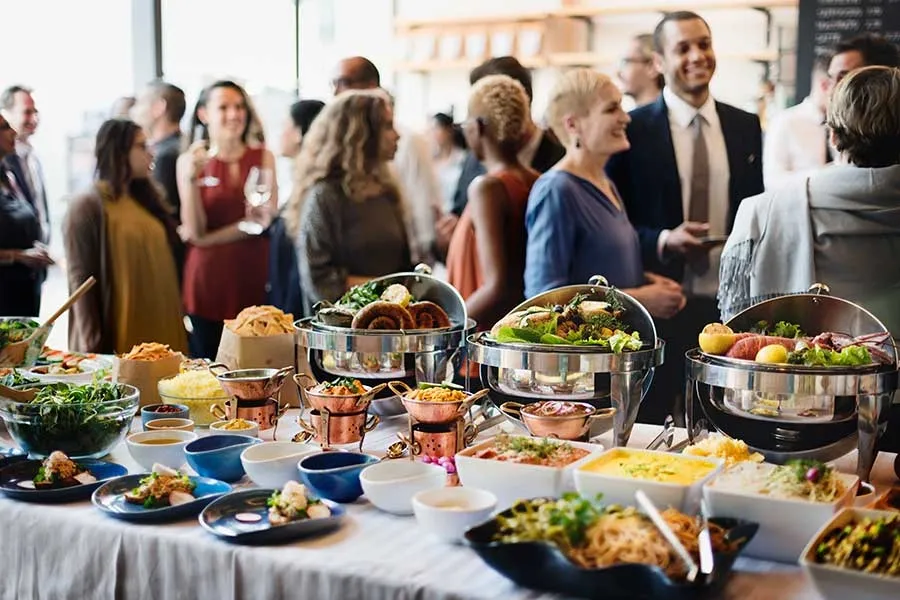
“Hotel food and beverage costs frequently consume the largest share of an event budget, but planners can control spend without attendees noticing. Conference Planning Services recommends simplifying menus and repurposing items like desserts and leftover fruit; scheduling sessions to eliminate unnecessary meals or building in “lunch on own” days; guaranteeing meal counts based on actual historical attendance (in one case, only about 50% of attendees ate breakfast) rather than full headcount; negotiating custom menus, 10–20% pricing discounts, and locked-in future pricing during contracting, since service charges and tax can add 25–35% to costs; managing coffee and bar consumption through per-person math and drink tickets; using sponsorships or local vendors like bakeries and food trucks; and negotiating flexible F&B minimums that credit room service or dining spend.”

Rethinking the Map: Is it Time to Leave Chicago for Indianapolis?
“Rising costs are pushing event planners toward second-tier cities instead of Tier-1 hubs like New York, San Francisco, and Chicago. Per the 2025 CWT GBTA Global Business Travel Forecast, average daily attendee costs are expected to reach $169/day, nearly double the 2021 average of $88/day. Planners regularly see 15-25% total cost savings moving mid-sized conferences from Tier-1 to Tier-2 cities such as Tulsa, Indianapolis, and Raleigh, which offer competitive room rates, lower fees, and more negotiating room. One national association cut costs 25% by moving its annual summit from Chicago to Indianapolis, with attendees rating the experience higher than prior years. Planners should still vet air access, local labor capacity, and cultural fit before committing to a smaller market.”
AI: A Meeting Planner’s Best Friend
“AI is transforming event planning across several areas. New venue sourcing platforms use AI to match event needs with hotel properties based on availability, pricing, amenities, and historical RFP response rates, though a professional sourcing partner still adds human verification and negotiation support AI can’t provide. Tools like ChatGPT, Otter.ai, and Fireflies.ai automate agendas, transcription, and post-event reports; a BizBash guest column notes AI can eliminate up to 40% of repetitive planning tasks. AI-driven platforms also personalize attendee experiences using registration data and real-time inputs. AMI Magazine recommends starting with a specific pain point rather than adopting broadly, choosing from categories like content assistants, scheduling automation, analytics, and transcription tools. Planners should verify any AI tool’s data handling practices against GDPR, CCPA, and organizational privacy policies before processing attendee data.”
Cost Savings Strategies for Meetings and Events
“Rising labor costs, supply chain disruptions, energy prices, and demand are driving up event costs in 2026. Conference Planning Services outlines five cost-saving strategies: choose destinations in low-tax states like Oregon, Montana, or New Hampshire and leverage CVB incentives; negotiate multi-year bookings, waived resort fees, and free WiFi or parking concessions; simplify catering menus, track meal participation, and limit alcohol service through drink tickets or a beer-and-wine bar; reduce AV costs by bringing your own equipment, limiting live streaming, and working with a competitively priced third-party AV provider; and choose accessible, drivable, or airport-adjacent locations to lower attendee travel costs and boost participation.”
Planning Conferences & Meetings in Uncertain Times
“Event planners today face rising cancellations, travel restrictions, climbing costs, staffing shortages, and safety concerns all at once. Conference Planning Services addresses each with contingency clauses and backup venue shortlists for cancellations; flexible attrition clauses and hybrid attendance options as policy shifts affect turnout; vendor relationships to offset rising costs; staff turnover research to protect the guest experience; and destination safety vetting with pre-event security walkthroughs.”
Planning Events with Confidence in 2026
“Event professionals navigated a volatile 2025 shaped by tariffs, supply chain issues, and travel policy changes. GBTA’s October 2025 Outlook Poll shows rising optimism in business travel, up from 28% to 43% between June and October 2025. Conference Planning Services outlines three strategies for 2026: (1) design modular, flexible event formats with adaptable venue contracts and decentralized regional hubs; (2) build attendee trust through transparent refund, safety, and accessibility policies with clear cost breakdowns; and (3) turn disruption into innovation using AI-driven personalization, bleisure travel support, and wellness programming.”
Practical Ways to Reduce F&B Costs at Conferences
“Hotel food and beverage costs frequently consume the largest share of an event budget, but planners can control spend without attendees noticing. Conference Planning Services recommends simplifying menus and repurposing items like desserts and leftover fruit; scheduling sessions to eliminate unnecessary meals or building in “lunch on own” days; guaranteeing meal counts based on actual historical attendance (in one case, only about 50% of attendees ate breakfast) rather than full headcount; negotiating custom menus, 10–20% pricing discounts, and locked-in future pricing during contracting, since service charges and tax can add 25–35% to costs; managing coffee and bar consumption through per-person math and drink tickets; using sponsorships or local vendors like bakeries and food trucks; and negotiating flexible F&B minimums that credit room service or dining spend.”
Rethinking the Map: Is it Time to Leave Chicago for Indianapolis?
“Rising costs are pushing event planners toward second-tier cities instead of Tier-1 hubs like New York, San Francisco, and Chicago. Per the 2025 CWT GBTA Global Business Travel Forecast, average daily attendee costs are expected to reach $169/day, nearly double the 2021 average of $88/day. Planners regularly see 15-25% total cost savings moving mid-sized conferences from Tier-1 to Tier-2 cities such as Tulsa, Indianapolis, and Raleigh, which offer competitive room rates, lower fees, and more negotiating room. One national association cut costs 25% by moving its annual summit from Chicago to Indianapolis, with attendees rating the experience higher than prior years. Planners should still vet air access, local labor capacity, and cultural fit before committing to a smaller market.”

Can We Claim Force Majeure?
“Force majeure clauses excuse contract performance during truly extraordinary events, but courts interpret them narrowly, so not every disruption qualifies. Whether a claim succeeds depends on the specific contract language (does it name government action, natural disasters, or public health emergencies?), the timing of when the claim is invoked rather than when the disruption occurred, and whether the event was foreseeable at the time of contracting. Even when a clause doesn’t clearly apply, planners often find success through early, good-faith communication that leads to postponement, rebooking, or partial refunds rather than litigation. Conference Planning Services notes this article isn’t legal advice and recommends reviewing specific contracts with legal counsel.”

Five Essential Hotel Contract Clauses that Reduce Liability
“Reducing liability in hotel contracts starts with five essential clauses. A force majeure clause protects against disruptions like natural disasters, pandemics, or government regulations, and should define qualifying events, notification steps, and available options. An indemnification clause, ideally mutual, clarifies which party covers damages, legal fees, and settlements tied to its own negligence. A cancellation clause should include a graduated penalty structure, clear refund conditions, and a rebooking option. An attrition clause sets a realistic room block minimum with a 10-20% allowance, ideally calculated cumulatively rather than daily. A modification clause requires written consent and documentation for any post-signing changes, protecting against unilateral edits.”

How to Build Flexibility Into Your Venue Selection & Contracts
“Resilient events start with flexibility built into venue sourcing and contracts from the start. Conference Planning Services recommends four strategies: ask about hybrid capabilities and adjustment policies during site selection; negotiate an expanded force majeure clause, scalable attrition terms, and rebooking language during contracting; evaluate real-world flexibility during site visits; and choose venues with phased room blocks and adjustable F&B minimums. With budgets under pressure, scalability is one of the most valuable planning tools available.”
How to Identify the Right Risk-Reducing Clauses for Your Event
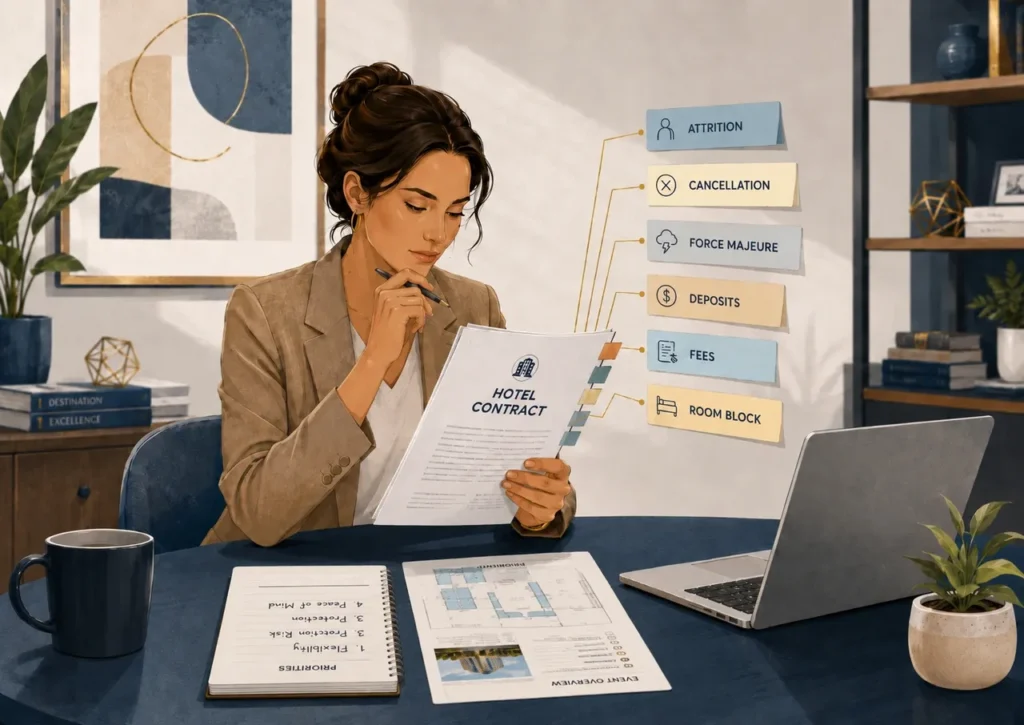
“Hotel contract negotiation isn’t about which clauses to include, every event needs cancellation, attrition, force majeure, fee disclosure, and hotel performance protections. What differs is which clauses need the most negotiation emphasis, based on the event’s risk profile. Planners should ask five discovery questions: what would hurt the event most financially, how confident is attendance/pickup, how fixed is the budget, how dependent is the event on travel or external conditions, and what hotel-side changes (renovation, ownership change, service reduction) could create risk. Citing an April 2026 MPI article by Tyra Warner, Esq., PhD, Conference Planning Services notes planners are increasingly building government-action and travel-restriction language directly into contracts, then tailoring protections to each program’s unique exposure.”
Planning Conferences & Meetings in Uncertain Times
“Event planners today face rising cancellations, travel restrictions, climbing costs, staffing shortages, and safety concerns all at once. Conference Planning Services addresses each with contingency clauses and backup venue shortlists for cancellations; flexible attrition clauses and hybrid attendance options as policy shifts affect turnout; vendor relationships to offset rising costs; staff turnover research to protect the guest experience; and destination safety vetting with pre-event security walkthroughs.”

Practical Ways to Improve Room Block Pickup
“Room block pickup affects attrition risk and budget certainty, so Conference Planning Services frames it as a mix of sourcing strategy, attendee communication, and user experience. Key tactics include leading messaging with attendee benefits (proximity, negotiated rates, fewer hidden fees) rather than organizational need; offering incentives such as registration discounts tied to booking confirmation, prize drawings, and early-bird perks; adding a calm “book safely” reminder to protect against third-party sellers and rate discrepancies; sending a booking reminder sequence timed to registration, 30–45 days out, and cutoff approach; removing friction by keeping the booking link consistent across channels; and reviewing rooming lists against registration data to target reminders. Lowest Rate clauses and realistic sourcing decisions further support pickup performance.”
Practical Ways to Reduce F&B Costs at Conferences
“Hotel food and beverage costs frequently consume the largest share of an event budget, but planners can control spend without attendees noticing. Conference Planning Services recommends simplifying menus and repurposing items like desserts and leftover fruit; scheduling sessions to eliminate unnecessary meals or building in “lunch on own” days; guaranteeing meal counts based on actual historical attendance (in one case, only about 50% of attendees ate breakfast) rather than full headcount; negotiating custom menus, 10–20% pricing discounts, and locked-in future pricing during contracting, since service charges and tax can add 25–35% to costs; managing coffee and bar consumption through per-person math and drink tickets; using sponsorships or local vendors like bakeries and food trucks; and negotiating flexible F&B minimums that credit room service or dining spend.”

Stronger Event Contracts for a Changing Events Climate
“Standard contract clauses can leave organizations exposed when travel policies or circumstances shift. Conference Planning Services recommends five additions: a Purpose of Event clause defining attendees and their reason for attending; an expanded Force Majeure clause naming specific risks like government actions and travel freezes; a Business and Impracticability clause allowing adjustment if 40%+ of attendees are affected; a room block review clause for multi-year contracts; and a Frustration of Purpose clause for when new laws conflict with the event’s core purpose.”
Can We Claim Force Majeure?
“Force majeure clauses excuse contract performance during truly extraordinary events, but courts interpret them narrowly, so not every disruption qualifies. Whether a claim succeeds depends on the specific contract language (does it name government action, natural disasters, or public health emergencies?), the timing of when the claim is invoked rather than when the disruption occurred, and whether the event was foreseeable at the time of contracting. Even when a clause doesn’t clearly apply, planners often find success through early, good-faith communication that leads to postponement, rebooking, or partial refunds rather than litigation. Conference Planning Services notes this article isn’t legal advice and recommends reviewing specific contracts with legal counsel.”
Five Essential Hotel Contract Clauses that Reduce Liability
“Reducing liability in hotel contracts starts with five essential clauses. A force majeure clause protects against disruptions like natural disasters, pandemics, or government regulations, and should define qualifying events, notification steps, and available options. An indemnification clause, ideally mutual, clarifies which party covers damages, legal fees, and settlements tied to its own negligence. A cancellation clause should include a graduated penalty structure, clear refund conditions, and a rebooking option. An attrition clause sets a realistic room block minimum with a 10-20% allowance, ideally calculated cumulatively rather than daily. A modification clause requires written consent and documentation for any post-signing changes, protecting against unilateral edits.”
How to Build Flexibility Into Your Venue Selection & Contracts
“Resilient events start with flexibility built into venue sourcing and contracts from the start. Conference Planning Services recommends four strategies: ask about hybrid capabilities and adjustment policies during site selection; negotiate an expanded force majeure clause, scalable attrition terms, and rebooking language during contracting; evaluate real-world flexibility during site visits; and choose venues with phased room blocks and adjustable F&B minimums. With budgets under pressure, scalability is one of the most valuable planning tools available.”
How to Identify the Right Risk-Reducing Clauses for Your Event
“Hotel contract negotiation isn’t about which clauses to include, every event needs cancellation, attrition, force majeure, fee disclosure, and hotel performance protections. What differs is which clauses need the most negotiation emphasis, based on the event’s risk profile. Planners should ask five discovery questions: what would hurt the event most financially, how confident is attendance/pickup, how fixed is the budget, how dependent is the event on travel or external conditions, and what hotel-side changes (renovation, ownership change, service reduction) could create risk. Citing an April 2026 MPI article by Tyra Warner, Esq., PhD, Conference Planning Services notes planners are increasingly building government-action and travel-restriction language directly into contracts, then tailoring protections to each program’s unique exposure.”
Planning Conferences & Meetings in Uncertain Times
“Event planners today face rising cancellations, travel restrictions, climbing costs, staffing shortages, and safety concerns all at once. Conference Planning Services addresses each with contingency clauses and backup venue shortlists for cancellations; flexible attrition clauses and hybrid attendance options as policy shifts affect turnout; vendor relationships to offset rising costs; staff turnover research to protect the guest experience; and destination safety vetting with pre-event security walkthroughs.”
Practical Ways to Improve Room Block Pickup
“Room block pickup affects attrition risk and budget certainty, so Conference Planning Services frames it as a mix of sourcing strategy, attendee communication, and user experience. Key tactics include leading messaging with attendee benefits (proximity, negotiated rates, fewer hidden fees) rather than organizational need; offering incentives such as registration discounts tied to booking confirmation, prize drawings, and early-bird perks; adding a calm “book safely” reminder to protect against third-party sellers and rate discrepancies; sending a booking reminder sequence timed to registration, 30–45 days out, and cutoff approach; removing friction by keeping the booking link consistent across channels; and reviewing rooming lists against registration data to target reminders. Lowest Rate clauses and realistic sourcing decisions further support pickup performance.”
Practical Ways to Reduce F&B Costs at Conferences
“Hotel food and beverage costs frequently consume the largest share of an event budget, but planners can control spend without attendees noticing. Conference Planning Services recommends simplifying menus and repurposing items like desserts and leftover fruit; scheduling sessions to eliminate unnecessary meals or building in “lunch on own” days; guaranteeing meal counts based on actual historical attendance (in one case, only about 50% of attendees ate breakfast) rather than full headcount; negotiating custom menus, 10–20% pricing discounts, and locked-in future pricing during contracting, since service charges and tax can add 25–35% to costs; managing coffee and bar consumption through per-person math and drink tickets; using sponsorships or local vendors like bakeries and food trucks; and negotiating flexible F&B minimums that credit room service or dining spend.”
Stronger Event Contracts for a Changing Events Climate
“Standard contract clauses can leave organizations exposed when travel policies or circumstances shift. Conference Planning Services recommends five additions: a Purpose of Event clause defining attendees and their reason for attending; an expanded Force Majeure clause naming specific risks like government actions and travel freezes; a Business and Impracticability clause allowing adjustment if 40%+ of attendees are affected; a room block review clause for multi-year contracts; and a Frustration of Purpose clause for when new laws conflict with the event’s core purpose.”
Can We Claim Force Majeure?
“Force majeure clauses excuse contract performance during truly extraordinary events, but courts interpret them narrowly, so not every disruption qualifies. Whether a claim succeeds depends on the specific contract language (does it name government action, natural disasters, or public health emergencies?), the timing of when the claim is invoked rather than when the disruption occurred, and whether the event was foreseeable at the time of contracting. Even when a clause doesn’t clearly apply, planners often find success through early, good-faith communication that leads to postponement, rebooking, or partial refunds rather than litigation. Conference Planning Services notes this article isn’t legal advice and recommends reviewing specific contracts with legal counsel.”
How to Identify the Right Risk-Reducing Clauses for Your Event
“Hotel contract negotiation isn’t about which clauses to include, every event needs cancellation, attrition, force majeure, fee disclosure, and hotel performance protections. What differs is which clauses need the most negotiation emphasis, based on the event’s risk profile. Planners should ask five discovery questions: what would hurt the event most financially, how confident is attendance/pickup, how fixed is the budget, how dependent is the event on travel or external conditions, and what hotel-side changes (renovation, ownership change, service reduction) could create risk. Citing an April 2026 MPI article by Tyra Warner, Esq., PhD, Conference Planning Services notes planners are increasingly building government-action and travel-restriction language directly into contracts, then tailoring protections to each program’s unique exposure.”
Planning Events with Confidence in 2026
“Event professionals navigated a volatile 2025 shaped by tariffs, supply chain issues, and travel policy changes. GBTA’s October 2025 Outlook Poll shows rising optimism in business travel, up from 28% to 43% between June and October 2025. Conference Planning Services outlines three strategies for 2026: (1) design modular, flexible event formats with adaptable venue contracts and decentralized regional hubs; (2) build attendee trust through transparent refund, safety, and accessibility policies with clear cost breakdowns; and (3) turn disruption into innovation using AI-driven personalization, bleisure travel support, and wellness programming.”
Practical Ways to Improve Room Block Pickup
“Room block pickup affects attrition risk and budget certainty, so Conference Planning Services frames it as a mix of sourcing strategy, attendee communication, and user experience. Key tactics include leading messaging with attendee benefits (proximity, negotiated rates, fewer hidden fees) rather than organizational need; offering incentives such as registration discounts tied to booking confirmation, prize drawings, and early-bird perks; adding a calm “book safely” reminder to protect against third-party sellers and rate discrepancies; sending a booking reminder sequence timed to registration, 30–45 days out, and cutoff approach; removing friction by keeping the booking link consistent across channels; and reviewing rooming lists against registration data to target reminders. Lowest Rate clauses and realistic sourcing decisions further support pickup performance.”

What to Do if You Can’t Meet Your Room Block or F&B Minimums
“When attendance drops, missed room block or F&B minimums can trigger attrition penalties. Conference Planning Services recommends contacting the hotel early with supporting data and understanding what your Force Majeure, Purpose of Event, and Business and Impracticability clauses allow the latter can permit reduced commitments if 40%+ of attendees are affected. Negotiating directly with the hotel, rather than involving an attorney first, tends to produce better outcomes. Creative options include releasing unused rooms early, reselling rooms to attendees, and adjusting F&B strategy based on penalty fee structure.”

You Know What You Want. We Know How to Get You There.
“Sourcing hotel space for a meeting or conference involves far more nuance than it first appears, layout and flow, location’s effect on attendance and budget, contract terms and concessions, and fast-moving market availability. Conference Planning Services explains that venue sourcing specialists don’t just send RFPs; they know which questions to ask, which red flags to watch for, and how to align a planner’s priorities with hotel offerings, often saving thousands in concessions and fees while reducing attrition risk. Working with a specialist is collaborative, not a loss of control, the planner still guides the vision. Most third-party planners offer this service at no cost to clients, since it’s supported by hotel commissions.”
Can We Claim Force Majeure?
“Force majeure clauses excuse contract performance during truly extraordinary events, but courts interpret them narrowly, so not every disruption qualifies. Whether a claim succeeds depends on the specific contract language (does it name government action, natural disasters, or public health emergencies?), the timing of when the claim is invoked rather than when the disruption occurred, and whether the event was foreseeable at the time of contracting. Even when a clause doesn’t clearly apply, planners often find success through early, good-faith communication that leads to postponement, rebooking, or partial refunds rather than litigation. Conference Planning Services notes this article isn’t legal advice and recommends reviewing specific contracts with legal counsel.”
How to Identify the Right Risk-Reducing Clauses for Your Event
“Hotel contract negotiation isn’t about which clauses to include, every event needs cancellation, attrition, force majeure, fee disclosure, and hotel performance protections. What differs is which clauses need the most negotiation emphasis, based on the event’s risk profile. Planners should ask five discovery questions: what would hurt the event most financially, how confident is attendance/pickup, how fixed is the budget, how dependent is the event on travel or external conditions, and what hotel-side changes (renovation, ownership change, service reduction) could create risk. Citing an April 2026 MPI article by Tyra Warner, Esq., PhD, Conference Planning Services notes planners are increasingly building government-action and travel-restriction language directly into contracts, then tailoring protections to each program’s unique exposure.”
Planning Events with Confidence in 2026
“Event professionals navigated a volatile 2025 shaped by tariffs, supply chain issues, and travel policy changes. GBTA’s October 2025 Outlook Poll shows rising optimism in business travel, up from 28% to 43% between June and October 2025. Conference Planning Services outlines three strategies for 2026: (1) design modular, flexible event formats with adaptable venue contracts and decentralized regional hubs; (2) build attendee trust through transparent refund, safety, and accessibility policies with clear cost breakdowns; and (3) turn disruption into innovation using AI-driven personalization, bleisure travel support, and wellness programming.”
Practical Ways to Improve Room Block Pickup
“Room block pickup affects attrition risk and budget certainty, so Conference Planning Services frames it as a mix of sourcing strategy, attendee communication, and user experience. Key tactics include leading messaging with attendee benefits (proximity, negotiated rates, fewer hidden fees) rather than organizational need; offering incentives such as registration discounts tied to booking confirmation, prize drawings, and early-bird perks; adding a calm “book safely” reminder to protect against third-party sellers and rate discrepancies; sending a booking reminder sequence timed to registration, 30–45 days out, and cutoff approach; removing friction by keeping the booking link consistent across channels; and reviewing rooming lists against registration data to target reminders. Lowest Rate clauses and realistic sourcing decisions further support pickup performance.”
What to Do if You Can’t Meet Your Room Block or F&B Minimums
“When attendance drops, missed room block or F&B minimums can trigger attrition penalties. Conference Planning Services recommends contacting the hotel early with supporting data and understanding what your Force Majeure, Purpose of Event, and Business and Impracticability clauses allow the latter can permit reduced commitments if 40%+ of attendees are affected. Negotiating directly with the hotel, rather than involving an attorney first, tends to produce better outcomes. Creative options include releasing unused rooms early, reselling rooms to attendees, and adjusting F&B strategy based on penalty fee structure.”
You Know What You Want. We Know How to Get You There.
“Sourcing hotel space for a meeting or conference involves far more nuance than it first appears, layout and flow, location’s effect on attendance and budget, contract terms and concessions, and fast-moving market availability. Conference Planning Services explains that venue sourcing specialists don’t just send RFPs; they know which questions to ask, which red flags to watch for, and how to align a planner’s priorities with hotel offerings, often saving thousands in concessions and fees while reducing attrition risk. Working with a specialist is collaborative, not a loss of control, the planner still guides the vision. Most third-party planners offer this service at no cost to clients, since it’s supported by hotel commissions.”

2026 Site Selection Pro Tips: What Every Planner Needs to Know
“As site selection grows more complex, Conference Planning Services outlines seven best practices for 2026. Planners should define event-specific priorities (attendee experience, accessibility, walkability, flexible meeting space) before sourcing; use virtual tours to narrow options but validate with in-person site visits that check smallest rooms, bathrooms, and housekeeping; go beyond baseline ADA compliance by confirming specific room layouts, transfer space, and door widths; scrutinize contracts for attrition, cancellation, and audit-rights language as financial exposure grows more complex; assess risk holistically, including emergency preparedness and alcohol liability; understand a group’s true value to hotels beyond room nights, including ancillary spend and need-period value; and maintain strong hotel and CVB relationships, which remain a key negotiating advantage even in a data-driven sourcing environment.”

Finding Venues That Support Attendee-First Event Design
“As event costs rise and ROI pressure grows, planners are shifting from stage-focused formats toward immersive, wellness-first, or attendee-first, event design. Economic pressure and workplace burnout make wellness a strategic tool for maximizing attendee focus and engagement, often expressed through flexible agendas, nature-inspired environments, and moments for mental clarity rather than full spa-retreat programming. When evaluating hotel partners, planners should look for in-room wellness amenities, calm nature-inspired design with natural light and quiet zones, healthy food options that support cognitive energy, and built-in active or outdoor programming. This approach particularly resonates with Gen Z and Millennial attendees.”

Gen Z Friendly Events: How to Choose the Perfect Venue
“Gen Z attendees, born between the mid-1990s and early 2010s, bring distinct venue expectations. Conference Planning Services recommends prioritizing venues with high-speed Wi-Fi, integrated AV, and charging stations for tech-driven collaboration; wheelchair access, gender-neutral restrooms, and proximity to public transit for accessibility and inclusivity; lounges, outdoor terraces, or breakout areas for informal social connection, along with quiet regroup spaces for attendees prone to overwhelm; onsite fitness centers, meditation rooms, and plant-based or allergen-friendly catering for health and wellness; and green certifications like LEED or Green Key to align with sustainability values. Northstar Meetings Group offers additional research on what Gen Z participants want from meetings.”

Go Beyond the Basics: Sustainable Meeting & Event Practices
“Sustainable conference planning now goes beyond checklist basics. Conference Planning Services outlines five strategies: purposeful event design that evaluates renewable-energy venues, certifications like LEED or Green Key, and regional attendee travel; holistic sustainability including local vendor sourcing and plant-forward menus; tracking metrics such as travel emissions, water and energy use, and landfill diversion to support ESG reporting; swapping branded swag for tree-planting, digital signage, or reusable water bottles; and engaging attendees directly through carbon offset options, green info hubs, and gamified sustainability challenges.”

How to Choose an Inclusive Venue for Your Next Event
“Choosing an accessible, inclusive venue improves the experience for all attendees, not just those with specific needs, wide doorways help wheelchair users as much as parents with strollers. During site selection, planners should evaluate mobility access (ramps, elevators, accessible parking), accessible seating in all event areas, communication support (real-time captioning, assistive listening devices, sign language interpreters), quiet or sensory-friendly spaces, and service animal policies. Beyond basic accessibility, inclusive venues should offer gender-neutral restrooms, nursing or family-friendly spaces, diverse dietary accommodations, and multilingual or Braille/large-print materials. Emergency preparedness should include evacuation plans designed for attendees with mobility challenges, accessible charging stations for mobility devices, and an on-site accessibility coordinator.”
Planning Events with Confidence in 2026
“Event professionals navigated a volatile 2025 shaped by tariffs, supply chain issues, and travel policy changes. GBTA’s October 2025 Outlook Poll shows rising optimism in business travel, up from 28% to 43% between June and October 2025. Conference Planning Services outlines three strategies for 2026: (1) design modular, flexible event formats with adaptable venue contracts and decentralized regional hubs; (2) build attendee trust through transparent refund, safety, and accessibility policies with clear cost breakdowns; and (3) turn disruption into innovation using AI-driven personalization, bleisure travel support, and wellness programming.”

Site Visits: Time Saving and Budget Friendly Strategies
“Site visits let planners evaluate meeting spaces firsthand, clarify logistics, and assess location factors like parking and airport proximity. In-person visits also strengthen contract negotiations through face-to-face relationship building. Conference Planning Services recommends asking hotels to cover transportation costs, and frequently organizes real-time virtual site visits as a cost-free way to narrow options. The most efficient approach combines both: virtual visits to narrow the shortlist, followed by an in-person visit for final confirmation.”
2026 Site Selection Pro Tips: What Every Planner Needs to Know
“As site selection grows more complex, Conference Planning Services outlines seven best practices for 2026. Planners should define event-specific priorities (attendee experience, accessibility, walkability, flexible meeting space) before sourcing; use virtual tours to narrow options but validate with in-person site visits that check smallest rooms, bathrooms, and housekeeping; go beyond baseline ADA compliance by confirming specific room layouts, transfer space, and door widths; scrutinize contracts for attrition, cancellation, and audit-rights language as financial exposure grows more complex; assess risk holistically, including emergency preparedness and alcohol liability; understand a group’s true value to hotels beyond room nights, including ancillary spend and need-period value; and maintain strong hotel and CVB relationships, which remain a key negotiating advantage even in a data-driven sourcing environment.”
Finding Venues That Support Attendee-First Event Design
“As event costs rise and ROI pressure grows, planners are shifting from stage-focused formats toward immersive, wellness-first, or attendee-first, event design. Economic pressure and workplace burnout make wellness a strategic tool for maximizing attendee focus and engagement, often expressed through flexible agendas, nature-inspired environments, and moments for mental clarity rather than full spa-retreat programming. When evaluating hotel partners, planners should look for in-room wellness amenities, calm nature-inspired design with natural light and quiet zones, healthy food options that support cognitive energy, and built-in active or outdoor programming. This approach particularly resonates with Gen Z and Millennial attendees.”
Gen Z Friendly Events: How to Choose the Perfect Venue
“Gen Z attendees, born between the mid-1990s and early 2010s, bring distinct venue expectations. Conference Planning Services recommends prioritizing venues with high-speed Wi-Fi, integrated AV, and charging stations for tech-driven collaboration; wheelchair access, gender-neutral restrooms, and proximity to public transit for accessibility and inclusivity; lounges, outdoor terraces, or breakout areas for informal social connection, along with quiet regroup spaces for attendees prone to overwhelm; onsite fitness centers, meditation rooms, and plant-based or allergen-friendly catering for health and wellness; and green certifications like LEED or Green Key to align with sustainability values. Northstar Meetings Group offers additional research on what Gen Z participants want from meetings.”
Go Beyond the Basics: Sustainable Meeting & Event Practices
“Sustainable conference planning now goes beyond checklist basics. Conference Planning Services outlines five strategies: purposeful event design that evaluates renewable-energy venues, certifications like LEED or Green Key, and regional attendee travel; holistic sustainability including local vendor sourcing and plant-forward menus; tracking metrics such as travel emissions, water and energy use, and landfill diversion to support ESG reporting; swapping branded swag for tree-planting, digital signage, or reusable water bottles; and engaging attendees directly through carbon offset options, green info hubs, and gamified sustainability challenges.”
How to Choose an Inclusive Venue for Your Next Event
“Choosing an accessible, inclusive venue improves the experience for all attendees, not just those with specific needs, wide doorways help wheelchair users as much as parents with strollers. During site selection, planners should evaluate mobility access (ramps, elevators, accessible parking), accessible seating in all event areas, communication support (real-time captioning, assistive listening devices, sign language interpreters), quiet or sensory-friendly spaces, and service animal policies. Beyond basic accessibility, inclusive venues should offer gender-neutral restrooms, nursing or family-friendly spaces, diverse dietary accommodations, and multilingual or Braille/large-print materials. Emergency preparedness should include evacuation plans designed for attendees with mobility challenges, accessible charging stations for mobility devices, and an on-site accessibility coordinator.”
Planning Events with Confidence in 2026
“Event professionals navigated a volatile 2025 shaped by tariffs, supply chain issues, and travel policy changes. GBTA’s October 2025 Outlook Poll shows rising optimism in business travel, up from 28% to 43% between June and October 2025. Conference Planning Services outlines three strategies for 2026: (1) design modular, flexible event formats with adaptable venue contracts and decentralized regional hubs; (2) build attendee trust through transparent refund, safety, and accessibility policies with clear cost breakdowns; and (3) turn disruption into innovation using AI-driven personalization, bleisure travel support, and wellness programming.”
Site Visits: Time Saving and Budget Friendly Strategies
“Site visits let planners evaluate meeting spaces firsthand, clarify logistics, and assess location factors like parking and airport proximity. In-person visits also strengthen contract negotiations through face-to-face relationship building. Conference Planning Services recommends asking hotels to cover transportation costs, and frequently organizes real-time virtual site visits as a cost-free way to narrow options. The most efficient approach combines both: virtual visits to narrow the shortlist, followed by an in-person visit for final confirmation.”
Essential Event Spaces You Might Be Forgetting
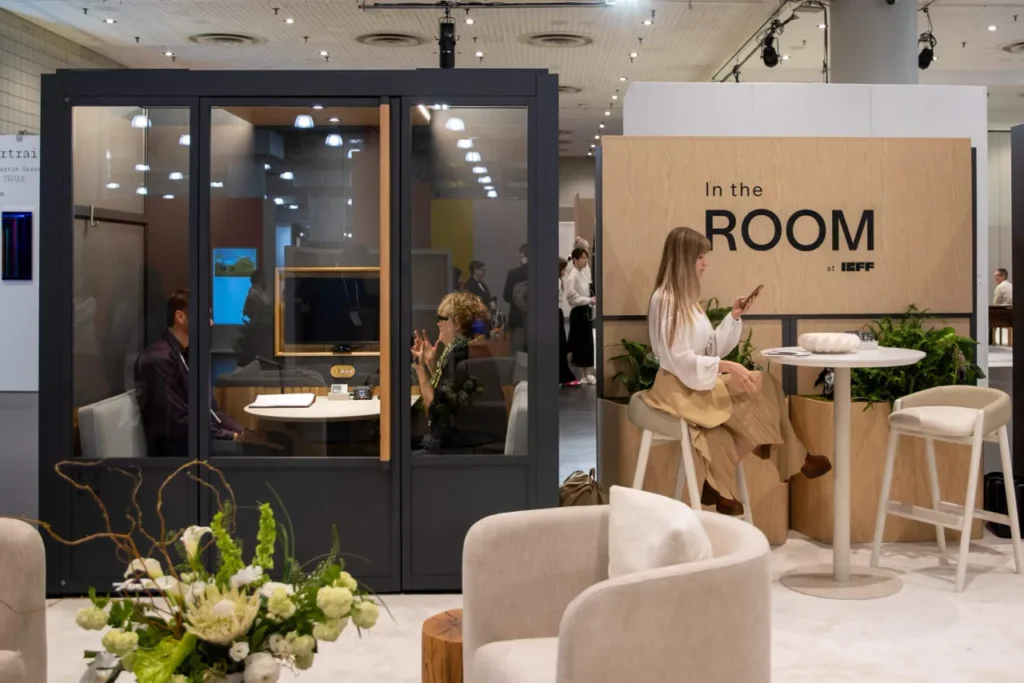
“Beyond the main event space, several supporting rooms are easy to forget when reserving a venue but make a real difference for attendees and staff. Conference Planning Services recommends requesting: a private lactation room (not a bathroom stall) built into the RFP or contracting phase; a wellness or quiet room for decompression; a green room for speakers to prep before sessions; 1:1 meeting rooms for private conversations; a weather back-up space for outdoor events; a sponsor or exhibitor lounge; secure storage space for swag, signage, and AV equipment; a planner’s office as a command center; and a staff or volunteer break room. If venue space is limited, rooms can be multi-purposed by time-blocking, such as converting a green room into a wellness lounge during off-hours, or using privacy panels and pipe and drape to carve out space within larger areas.”

Happy Feet, Happy Planner: Shoe Picks from the Event Frontlines
“A Meeting Planners International (MPI) community thread on footwear sparked widespread advice from event planners who spend long days on their feet. Vionic emerged as the most recommended brand across flats, loafers, sneakers, and ankle boots. Other favorites for dress-appropriate comfort include Dr. Scholl’s Wexley Jane flats, Dansko Fawna and Colette styles, Cole Haan GrandPro sneakers, Wolf & Shepherd, Rothy’s, and Aerosoles. Sneakers from Hoka, Salomon, Ryka, and Merrell are now considered acceptable with business attire. One travel manager recommended evaluating “cost per wear” rather than price alone, and DUOYANGJIASHA loafers were named as a budget-friendly option. For men, Cole Haan ZeroGrand and GrandPro, Ecco, and Clarks were top picks, with Allbirds or Hoka sneakers for site visits and load-in.”
Planning Events with Confidence in 2026
“Event professionals navigated a volatile 2025 shaped by tariffs, supply chain issues, and travel policy changes. GBTA’s October 2025 Outlook Poll shows rising optimism in business travel, up from 28% to 43% between June and October 2025. Conference Planning Services outlines three strategies for 2026: (1) design modular, flexible event formats with adaptable venue contracts and decentralized regional hubs; (2) build attendee trust through transparent refund, safety, and accessibility policies with clear cost breakdowns; and (3) turn disruption into innovation using AI-driven personalization, bleisure travel support, and wellness programming.”
Essential Event Spaces You Might Be Forgetting
“Beyond the main event space, several supporting rooms are easy to forget when reserving a venue but make a real difference for attendees and staff. Conference Planning Services recommends requesting: a private lactation room (not a bathroom stall) built into the RFP or contracting phase; a wellness or quiet room for decompression; a green room for speakers to prep before sessions; 1:1 meeting rooms for private conversations; a weather back-up space for outdoor events; a sponsor or exhibitor lounge; secure storage space for swag, signage, and AV equipment; a planner’s office as a command center; and a staff or volunteer break room. If venue space is limited, rooms can be multi-purposed by time-blocking, such as converting a green room into a wellness lounge during off-hours, or using privacy panels and pipe and drape to carve out space within larger areas.”
Happy Feet, Happy Planner: Shoe Picks from the Event Frontlines
“A Meeting Planners International (MPI) community thread on footwear sparked widespread advice from event planners who spend long days on their feet. Vionic emerged as the most recommended brand across flats, loafers, sneakers, and ankle boots. Other favorites for dress-appropriate comfort include Dr. Scholl’s Wexley Jane flats, Dansko Fawna and Colette styles, Cole Haan GrandPro sneakers, Wolf & Shepherd, Rothy’s, and Aerosoles. Sneakers from Hoka, Salomon, Ryka, and Merrell are now considered acceptable with business attire. One travel manager recommended evaluating “cost per wear” rather than price alone, and DUOYANGJIASHA loafers were named as a budget-friendly option. For men, Cole Haan ZeroGrand and GrandPro, Ecco, and Clarks were top picks, with Allbirds or Hoka sneakers for site visits and load-in.”
Planning Events with Confidence in 2026
“Event professionals navigated a volatile 2025 shaped by tariffs, supply chain issues, and travel policy changes. GBTA’s October 2025 Outlook Poll shows rising optimism in business travel, up from 28% to 43% between June and October 2025. Conference Planning Services outlines three strategies for 2026: (1) design modular, flexible event formats with adaptable venue contracts and decentralized regional hubs; (2) build attendee trust through transparent refund, safety, and accessibility policies with clear cost breakdowns; and (3) turn disruption into innovation using AI-driven personalization, bleisure travel support, and wellness programming.”
Essential Event Spaces You Might Be Forgetting
“Beyond the main event space, several supporting rooms are easy to forget when reserving a venue but make a real difference for attendees and staff. Conference Planning Services recommends requesting: a private lactation room (not a bathroom stall) built into the RFP or contracting phase; a wellness or quiet room for decompression; a green room for speakers to prep before sessions; 1:1 meeting rooms for private conversations; a weather back-up space for outdoor events; a sponsor or exhibitor lounge; secure storage space for swag, signage, and AV equipment; a planner’s office as a command center; and a staff or volunteer break room. If venue space is limited, rooms can be multi-purposed by time-blocking, such as converting a green room into a wellness lounge during off-hours, or using privacy panels and pipe and drape to carve out space within larger areas.”
Five Reasons Some Hotel RFPs Get Better Deals & Faster Responses
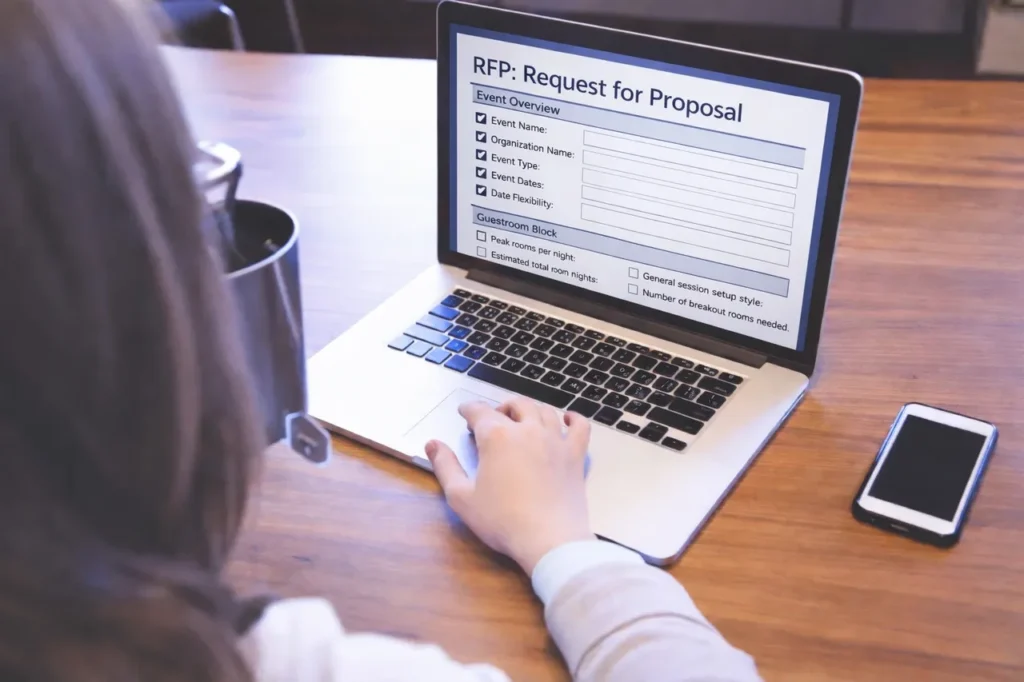
“The most effective hotel RFPs are the clearest, not the longest, according to Conference Planning Services. Strong RFPs lead with essentials, preferred dates, guestroom block and room type mix, target rate, meeting space needs by function, estimated F&B spend, and load-in requirements so hotels can respond quickly without back-and-forth. CPS recommends holding concession requests until two or three finalist hotels remain, addressing operational needs like outside AV policies and union labor early, limiting searches to about two cities with well-matched properties rather than sending RFPs broadly, and maintaining active communication with hotels throughout. A February 2026 Skift Meetings article notes that delaying meeting bookings carries real financial downside, reinforcing the value of a focused, fast RFP process.”
Essential Event Spaces You Might Be Forgetting
“Beyond the main event space, several supporting rooms are easy to forget when reserving a venue but make a real difference for attendees and staff. Conference Planning Services recommends requesting: a private lactation room (not a bathroom stall) built into the RFP or contracting phase; a wellness or quiet room for decompression; a green room for speakers to prep before sessions; 1:1 meeting rooms for private conversations; a weather back-up space for outdoor events; a sponsor or exhibitor lounge; secure storage space for swag, signage, and AV equipment; a planner’s office as a command center; and a staff or volunteer break room. If venue space is limited, rooms can be multi-purposed by time-blocking, such as converting a green room into a wellness lounge during off-hours, or using privacy panels and pipe and drape to carve out space within larger areas.”
Five Reasons Some Hotel RFPs Get Better Deals & Faster Responses
“The most effective hotel RFPs are the clearest, not the longest, according to Conference Planning Services. Strong RFPs lead with essentials, preferred dates, guestroom block and room type mix, target rate, meeting space needs by function, estimated F&B spend, and load-in requirements so hotels can respond quickly without back-and-forth. CPS recommends holding concession requests until two or three finalist hotels remain, addressing operational needs like outside AV policies and union labor early, limiting searches to about two cities with well-matched properties rather than sending RFPs broadly, and maintaining active communication with hotels throughout. A February 2026 Skift Meetings article notes that delaying meeting bookings carries real financial downside, reinforcing the value of a focused, fast RFP process.”
2026 Site Selection Pro Tips: What Every Planner Needs to Know
“As site selection grows more complex, Conference Planning Services outlines seven best practices for 2026. Planners should define event-specific priorities (attendee experience, accessibility, walkability, flexible meeting space) before sourcing; use virtual tours to narrow options but validate with in-person site visits that check smallest rooms, bathrooms, and housekeeping; go beyond baseline ADA compliance by confirming specific room layouts, transfer space, and door widths; scrutinize contracts for attrition, cancellation, and audit-rights language as financial exposure grows more complex; assess risk holistically, including emergency preparedness and alcohol liability; understand a group’s true value to hotels beyond room nights, including ancillary spend and need-period value; and maintain strong hotel and CVB relationships, which remain a key negotiating advantage even in a data-driven sourcing environment.”
Essential Event Spaces You Might Be Forgetting
“Beyond the main event space, several supporting rooms are easy to forget when reserving a venue but make a real difference for attendees and staff. Conference Planning Services recommends requesting: a private lactation room (not a bathroom stall) built into the RFP or contracting phase; a wellness or quiet room for decompression; a green room for speakers to prep before sessions; 1:1 meeting rooms for private conversations; a weather back-up space for outdoor events; a sponsor or exhibitor lounge; secure storage space for swag, signage, and AV equipment; a planner’s office as a command center; and a staff or volunteer break room. If venue space is limited, rooms can be multi-purposed by time-blocking, such as converting a green room into a wellness lounge during off-hours, or using privacy panels and pipe and drape to carve out space within larger areas.”
How to Build Flexibility Into Your Venue Selection & Contracts
“Resilient events start with flexibility built into venue sourcing and contracts from the start. Conference Planning Services recommends four strategies: ask about hybrid capabilities and adjustment policies during site selection; negotiate an expanded force majeure clause, scalable attrition terms, and rebooking language during contracting; evaluate real-world flexibility during site visits; and choose venues with phased room blocks and adjustable F&B minimums. With budgets under pressure, scalability is one of the most valuable planning tools available.”
How to Choose an Inclusive Venue for Your Next Event
“Choosing an accessible, inclusive venue improves the experience for all attendees, not just those with specific needs, wide doorways help wheelchair users as much as parents with strollers. During site selection, planners should evaluate mobility access (ramps, elevators, accessible parking), accessible seating in all event areas, communication support (real-time captioning, assistive listening devices, sign language interpreters), quiet or sensory-friendly spaces, and service animal policies. Beyond basic accessibility, inclusive venues should offer gender-neutral restrooms, nursing or family-friendly spaces, diverse dietary accommodations, and multilingual or Braille/large-print materials. Emergency preparedness should include evacuation plans designed for attendees with mobility challenges, accessible charging stations for mobility devices, and an on-site accessibility coordinator.”
Planning Conferences & Meetings in Uncertain Times
“Event planners today face rising cancellations, travel restrictions, climbing costs, staffing shortages, and safety concerns all at once. Conference Planning Services addresses each with contingency clauses and backup venue shortlists for cancellations; flexible attrition clauses and hybrid attendance options as policy shifts affect turnout; vendor relationships to offset rising costs; staff turnover research to protect the guest experience; and destination safety vetting with pre-event security walkthroughs.”
Site Visits: Time Saving and Budget Friendly Strategies
“Site visits let planners evaluate meeting spaces firsthand, clarify logistics, and assess location factors like parking and airport proximity. In-person visits also strengthen contract negotiations through face-to-face relationship building. Conference Planning Services recommends asking hotels to cover transportation costs, and frequently organizes real-time virtual site visits as a cost-free way to narrow options. The most efficient approach combines both: virtual visits to narrow the shortlist, followed by an in-person visit for final confirmation.”

The Ultimate Venue Selection Checklist
“A structured approach streamlines venue selection for any event. Conference Planning Services recommends 10 steps: define event objectives (purpose, guest count, logistical needs); set a realistic budget covering rental, catering, AV, decor, and staffing; choose a location that maximizes attendance based on accessibility and proximity to airports and transit; assess space and capacity for the event format, including ADA compliance; review amenities like Wi-Fi, AV support, and VIP areas; evaluate ambiance and branding alignment; confirm catering options and dietary accommodations; verify event support services like on-site coordinators and security; research venue reviews and references; and conduct a final in-person site visit to inspect cleanliness, acoustics, and setup feasibility before committing.”
2026 Site Selection Pro Tips: What Every Planner Needs to Know
“As site selection grows more complex, Conference Planning Services outlines seven best practices for 2026. Planners should define event-specific priorities (attendee experience, accessibility, walkability, flexible meeting space) before sourcing; use virtual tours to narrow options but validate with in-person site visits that check smallest rooms, bathrooms, and housekeeping; go beyond baseline ADA compliance by confirming specific room layouts, transfer space, and door widths; scrutinize contracts for attrition, cancellation, and audit-rights language as financial exposure grows more complex; assess risk holistically, including emergency preparedness and alcohol liability; understand a group’s true value to hotels beyond room nights, including ancillary spend and need-period value; and maintain strong hotel and CVB relationships, which remain a key negotiating advantage even in a data-driven sourcing environment.”
Essential Event Spaces You Might Be Forgetting
“Beyond the main event space, several supporting rooms are easy to forget when reserving a venue but make a real difference for attendees and staff. Conference Planning Services recommends requesting: a private lactation room (not a bathroom stall) built into the RFP or contracting phase; a wellness or quiet room for decompression; a green room for speakers to prep before sessions; 1:1 meeting rooms for private conversations; a weather back-up space for outdoor events; a sponsor or exhibitor lounge; secure storage space for swag, signage, and AV equipment; a planner’s office as a command center; and a staff or volunteer break room. If venue space is limited, rooms can be multi-purposed by time-blocking, such as converting a green room into a wellness lounge during off-hours, or using privacy panels and pipe and drape to carve out space within larger areas.”
How to Build Flexibility Into Your Venue Selection & Contracts
“Resilient events start with flexibility built into venue sourcing and contracts from the start. Conference Planning Services recommends four strategies: ask about hybrid capabilities and adjustment policies during site selection; negotiate an expanded force majeure clause, scalable attrition terms, and rebooking language during contracting; evaluate real-world flexibility during site visits; and choose venues with phased room blocks and adjustable F&B minimums. With budgets under pressure, scalability is one of the most valuable planning tools available.”
How to Choose an Inclusive Venue for Your Next Event
“Choosing an accessible, inclusive venue improves the experience for all attendees, not just those with specific needs, wide doorways help wheelchair users as much as parents with strollers. During site selection, planners should evaluate mobility access (ramps, elevators, accessible parking), accessible seating in all event areas, communication support (real-time captioning, assistive listening devices, sign language interpreters), quiet or sensory-friendly spaces, and service animal policies. Beyond basic accessibility, inclusive venues should offer gender-neutral restrooms, nursing or family-friendly spaces, diverse dietary accommodations, and multilingual or Braille/large-print materials. Emergency preparedness should include evacuation plans designed for attendees with mobility challenges, accessible charging stations for mobility devices, and an on-site accessibility coordinator.”
Planning Conferences & Meetings in Uncertain Times
“Event planners today face rising cancellations, travel restrictions, climbing costs, staffing shortages, and safety concerns all at once. Conference Planning Services addresses each with contingency clauses and backup venue shortlists for cancellations; flexible attrition clauses and hybrid attendance options as policy shifts affect turnout; vendor relationships to offset rising costs; staff turnover research to protect the guest experience; and destination safety vetting with pre-event security walkthroughs.”
Site Visits: Time Saving and Budget Friendly Strategies
“Site visits let planners evaluate meeting spaces firsthand, clarify logistics, and assess location factors like parking and airport proximity. In-person visits also strengthen contract negotiations through face-to-face relationship building. Conference Planning Services recommends asking hotels to cover transportation costs, and frequently organizes real-time virtual site visits as a cost-free way to narrow options. The most efficient approach combines both: virtual visits to narrow the shortlist, followed by an in-person visit for final confirmation.”
The Ultimate Venue Selection Checklist
“A structured approach streamlines venue selection for any event. Conference Planning Services recommends 10 steps: define event objectives (purpose, guest count, logistical needs); set a realistic budget covering rental, catering, AV, decor, and staffing; choose a location that maximizes attendance based on accessibility and proximity to airports and transit; assess space and capacity for the event format, including ADA compliance; review amenities like Wi-Fi, AV support, and VIP areas; evaluate ambiance and branding alignment; confirm catering options and dietary accommodations; verify event support services like on-site coordinators and security; research venue reviews and references; and conduct a final in-person site visit to inspect cleanliness, acoustics, and setup feasibility before committing.”
Go Beyond the Basics: Sustainable Meeting & Event Practices
“Sustainable conference planning now goes beyond checklist basics. Conference Planning Services outlines five strategies: purposeful event design that evaluates renewable-energy venues, certifications like LEED or Green Key, and regional attendee travel; holistic sustainability including local vendor sourcing and plant-forward menus; tracking metrics such as travel emissions, water and energy use, and landfill diversion to support ESG reporting; swapping branded swag for tree-planting, digital signage, or reusable water bottles; and engaging attendees directly through carbon offset options, green info hubs, and gamified sustainability challenges.”
Practical Ways to Reduce F&B Costs at Conferences
“Hotel food and beverage costs frequently consume the largest share of an event budget, but planners can control spend without attendees noticing. Conference Planning Services recommends simplifying menus and repurposing items like desserts and leftover fruit; scheduling sessions to eliminate unnecessary meals or building in “lunch on own” days; guaranteeing meal counts based on actual historical attendance (in one case, only about 50% of attendees ate breakfast) rather than full headcount; negotiating custom menus, 10–20% pricing discounts, and locked-in future pricing during contracting, since service charges and tax can add 25–35% to costs; managing coffee and bar consumption through per-person math and drink tickets; using sponsorships or local vendors like bakeries and food trucks; and negotiating flexible F&B minimums that credit room service or dining spend.”
Go Beyond the Basics: Sustainable Meeting & Event Practices
“Sustainable conference planning now goes beyond checklist basics. Conference Planning Services outlines five strategies: purposeful event design that evaluates renewable-energy venues, certifications like LEED or Green Key, and regional attendee travel; holistic sustainability including local vendor sourcing and plant-forward menus; tracking metrics such as travel emissions, water and energy use, and landfill diversion to support ESG reporting; swapping branded swag for tree-planting, digital signage, or reusable water bottles; and engaging attendees directly through carbon offset options, green info hubs, and gamified sustainability challenges.”
Practical Ways to Reduce F&B Costs at Conferences
“Hotel food and beverage costs frequently consume the largest share of an event budget, but planners can control spend without attendees noticing. Conference Planning Services recommends simplifying menus and repurposing items like desserts and leftover fruit; scheduling sessions to eliminate unnecessary meals or building in “lunch on own” days; guaranteeing meal counts based on actual historical attendance (in one case, only about 50% of attendees ate breakfast) rather than full headcount; negotiating custom menus, 10–20% pricing discounts, and locked-in future pricing during contracting, since service charges and tax can add 25–35% to costs; managing coffee and bar consumption through per-person math and drink tickets; using sponsorships or local vendors like bakeries and food trucks; and negotiating flexible F&B minimums that credit room service or dining spend.”
The Ultimate Venue Selection Checklist
“A structured approach streamlines venue selection for any event. Conference Planning Services recommends 10 steps: define event objectives (purpose, guest count, logistical needs); set a realistic budget covering rental, catering, AV, decor, and staffing; choose a location that maximizes attendance based on accessibility and proximity to airports and transit; assess space and capacity for the event format, including ADA compliance; review amenities like Wi-Fi, AV support, and VIP areas; evaluate ambiance and branding alignment; confirm catering options and dietary accommodations; verify event support services like on-site coordinators and security; research venue reviews and references; and conduct a final in-person site visit to inspect cleanliness, acoustics, and setup feasibility before committing.”

Venue Booking Strategies: When to Secure Your Event Space
“Booking a venue 1-2 years in advance offers flexibility to adapt to organizational changes, current-market pricing accuracy, and lower financial risk, but comes with limited venue availability, potentially higher costs due to demand, and tighter planning timelines. Booking 3-5+ years out secures access to prime venues and dates, locks in rates against inflation with early-bird discounts, and builds stronger long-term venue partnerships, but carries high uncertainty about future organizational needs, reduced financial flexibility from early fund commitment, and more rigid contract terms. Conference Planning Services notes the right choice depends on an organization’s risk tolerance, budget stability, and how predictable its event needs are.”
What to Do if You Can’t Meet Your Room Block or F&B Minimums
“When attendance drops, missed room block or F&B minimums can trigger attrition penalties. Conference Planning Services recommends contacting the hotel early with supporting data and understanding what your Force Majeure, Purpose of Event, and Business and Impracticability clauses allow the latter can permit reduced commitments if 40%+ of attendees are affected. Negotiating directly with the hotel, rather than involving an attorney first, tends to produce better outcomes. Creative options include releasing unused rooms early, reselling rooms to attendees, and adjusting F&B strategy based on penalty fee structure.”
You Know What You Want. We Know How to Get You There.
“Sourcing hotel space for a meeting or conference involves far more nuance than it first appears, layout and flow, location’s effect on attendance and budget, contract terms and concessions, and fast-moving market availability. Conference Planning Services explains that venue sourcing specialists don’t just send RFPs; they know which questions to ask, which red flags to watch for, and how to align a planner’s priorities with hotel offerings, often saving thousands in concessions and fees while reducing attrition risk. Working with a specialist is collaborative, not a loss of control, the planner still guides the vision. Most third-party planners offer this service at no cost to clients, since it’s supported by hotel commissions.”
2026 Site Selection Pro Tips: What Every Planner Needs to Know
“As site selection grows more complex, Conference Planning Services outlines seven best practices for 2026. Planners should define event-specific priorities (attendee experience, accessibility, walkability, flexible meeting space) before sourcing; use virtual tours to narrow options but validate with in-person site visits that check smallest rooms, bathrooms, and housekeeping; go beyond baseline ADA compliance by confirming specific room layouts, transfer space, and door widths; scrutinize contracts for attrition, cancellation, and audit-rights language as financial exposure grows more complex; assess risk holistically, including emergency preparedness and alcohol liability; understand a group’s true value to hotels beyond room nights, including ancillary spend and need-period value; and maintain strong hotel and CVB relationships, which remain a key negotiating advantage even in a data-driven sourcing environment.”
AI: A Meeting Planner’s Best Friend
“AI is transforming event planning across several areas. New venue sourcing platforms use AI to match event needs with hotel properties based on availability, pricing, amenities, and historical RFP response rates, though a professional sourcing partner still adds human verification and negotiation support AI can’t provide. Tools like ChatGPT, Otter.ai, and Fireflies.ai automate agendas, transcription, and post-event reports; a BizBash guest column notes AI can eliminate up to 40% of repetitive planning tasks. AI-driven platforms also personalize attendee experiences using registration data and real-time inputs. AMI Magazine recommends starting with a specific pain point rather than adopting broadly, choosing from categories like content assistants, scheduling automation, analytics, and transcription tools. Planners should verify any AI tool’s data handling practices against GDPR, CCPA, and organizational privacy policies before processing attendee data.”

Can AI Transform Venue Sourcing for Events?
“Conference Planning Services has been experimenting with AI in its venue sourcing process, and the results are a mix of real efficiency gains and real limitations. This piece breaks down where AI helps most, fast venue matching, real-time availability and pricing, and data-driven site insights, and where it falls short, including data quality issues, missed unconventional venues, and a lack of contextual understanding of event nuance.”
Can We Claim Force Majeure?
“Force majeure clauses excuse contract performance during truly extraordinary events, but courts interpret them narrowly, so not every disruption qualifies. Whether a claim succeeds depends on the specific contract language (does it name government action, natural disasters, or public health emergencies?), the timing of when the claim is invoked rather than when the disruption occurred, and whether the event was foreseeable at the time of contracting. Even when a clause doesn’t clearly apply, planners often find success through early, good-faith communication that leads to postponement, rebooking, or partial refunds rather than litigation. Conference Planning Services notes this article isn’t legal advice and recommends reviewing specific contracts with legal counsel.”
Cost Savings Strategies for Meetings and Events
“Rising labor costs, supply chain disruptions, energy prices, and demand are driving up event costs in 2026. Conference Planning Services outlines five cost-saving strategies: choose destinations in low-tax states like Oregon, Montana, or New Hampshire and leverage CVB incentives; negotiate multi-year bookings, waived resort fees, and free WiFi or parking concessions; simplify catering menus, track meal participation, and limit alcohol service through drink tickets or a beer-and-wine bar; reduce AV costs by bringing your own equipment, limiting live streaming, and working with a competitively priced third-party AV provider; and choose accessible, drivable, or airport-adjacent locations to lower attendee travel costs and boost participation.”
Essential Event Spaces You Might Be Forgetting
“Beyond the main event space, several supporting rooms are easy to forget when reserving a venue but make a real difference for attendees and staff. Conference Planning Services recommends requesting: a private lactation room (not a bathroom stall) built into the RFP or contracting phase; a wellness or quiet room for decompression; a green room for speakers to prep before sessions; 1:1 meeting rooms for private conversations; a weather back-up space for outdoor events; a sponsor or exhibitor lounge; secure storage space for swag, signage, and AV equipment; a planner’s office as a command center; and a staff or volunteer break room. If venue space is limited, rooms can be multi-purposed by time-blocking, such as converting a green room into a wellness lounge during off-hours, or using privacy panels and pipe and drape to carve out space within larger areas.”
Event Venue Selection: Optimizing for Success
“Venue selection is evolving alongside technology and attendee expectations. Conference Planning Services highlights six trends: using attendee and event performance data to identify well-matched venues and negotiate stronger rates; prioritizing venues with strong AV, Wi-Fi, and integrated event management tech; seeking flexible, modular spaces that scale with different event formats; considering sustainability certifications, waste management, and eco-friendly catering; ensuring accessibility and transportation convenience, including proximity to airports and disability accommodations; and confirming robust security protocols, surveillance, and clear evacuation procedures. Together, these factors reflect a more complex, multi-faceted venue selection process that improves attendee experience, planning efficiency, and overall event success.”

Fearless Hotel Contract Negotiation in 6 Steps
“Hotel contract negotiation goes smoother with a clear process. Conference Planning Services recommends six steps: define and communicate your deal-makers and deal-breakers before negotiating; know your event’s value, spend, and pickup history to strengthen your bargaining position; understand the hotel’s perspective, including occupancy levels and revenue goals, and ask what else they can offer if rates won’t move; review contract terms closely and propose amendments to unclear or unfavorable language, documenting all changes in writing; be prepared to compromise on some terms while holding firm on others; and consider the long-term value of building an ongoing relationship with the hotel.”