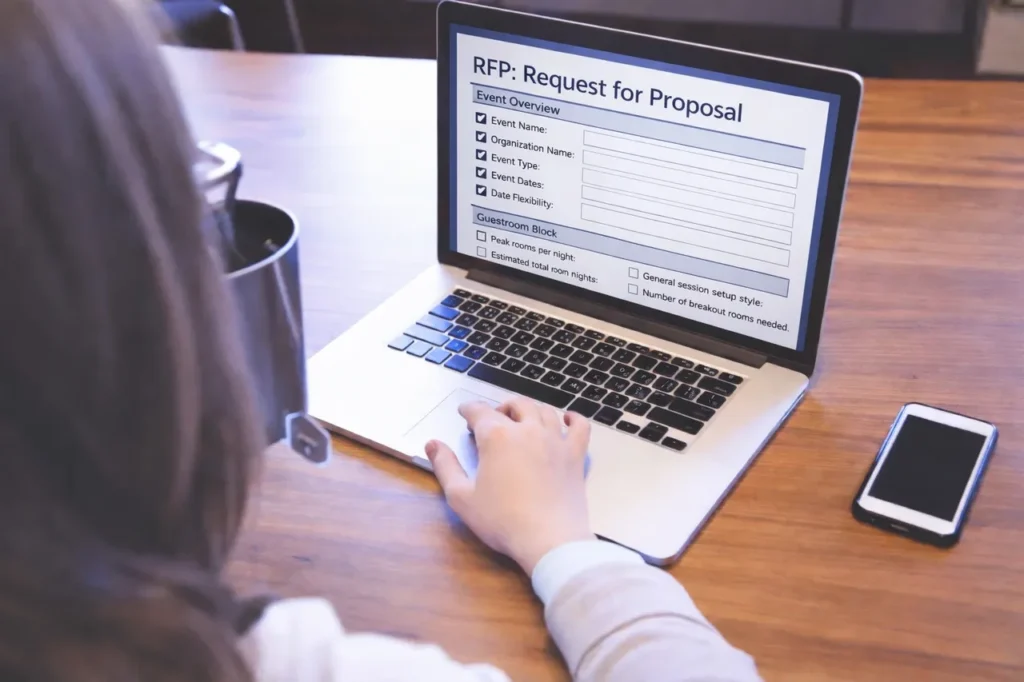
A well-written hotel RFP can make the difference between receiving clear, competitive proposals and spending weeks sorting through incomplete or inconsistent responses.
At Conference Planning Services (CPS), we’ve sent hundreds of RFPs on behalf of associations, nonprofits, and corporate teams. Over time, we’ve found that the most effective RFPs are not the longest ones – they’re the clearest ones. When hotels have the right information up front, they can respond faster and with more accurate proposals.
If you’re preparing an RFP now, we created a simple checklist you can use to gather the key information before sending it to hotels.
👉 Download the Hotel RFP Preparation Checklist.
Here are a few practices that consistently lead to better results.
Focus on the essentials
A strong RFP should give hotels a clear snapshot of the program so they can quickly determine whether they are a good fit. The key information we always include is:
- Preferred dates (and any flexibility)
- Guestroom block and room type mix
- Target rate or budget range
- Meeting space requirements by function
- Estimated food and beverage spend
- Any load-in or extended setup needs
Providing these details upfront helps hotels evaluate availability, pricing, and space needs without having to come back with multiple clarification questions.
Keep the initial RFP streamlined
One common mistake is including long lists of questions or detailed concessions in the initial RFP. In our experience, that slows the process down.
At CPS, we typically wait to request concessions until the group has narrowed the list to two or three finalist hotels. At that stage, hotels are more invested in the opportunity and negotiations tend to be more productive. It also prevents everyone from spending time negotiating items that may not ultimately matter.
Address operational needs early
If there are elements that could affect costs or logistics, it’s helpful to communicate those early.
For example, one of our clients always works with an outside AV company. Because of that, we ask hotels upfront about policies related to outside AV, including:
- Load-in and load-out access
- Any fees associated with bringing in an outside provider
- Union labor requirements where applicable
- Potential shadow fees at union properties
Clarifying these details early helps avoid surprises later in the process.
Send RFPs to the right hotels
More proposals do not always lead to better options. Instead of sending RFPs broadly, we focus on properties that genuinely match the program’s size, budget, and brand level.
We also recommend limiting the initial search to no more than two cities at a time, with a small group of well-matched hotels in each destination. This keeps the process manageable and ensures proposals are easier to compare.
A targeted approach saves time for planners and our hotel partners and results in more relevant proposals.
Maintain communication
Hotels receive a high volume of RFPs, so follow-up is an important part of the process. When we’re seriously considering a property, we confirm receipt, answer questions quickly, and maintain open communication.
We also follow up with hotels to clarify any details, confirm availability, and ensure we fully understand the responses before presenting options to our clients. This helps us compare proposals more accurately and prevents misunderstandings later in the process.
Strong communication and relationships make the sourcing process smoother for everyone involved.
The bottom line
A better RFP is not just about getting cleaner proposals. It is also about helping your organization move sooner and with more confidence. In a market where delays can mean fewer options and higher costs, planners benefit from getting aligned internally, narrowing the field, and going out with a focused request. That urgency has become more visible across the industry, with Skift Meetings recently highlighting the financial downside of waiting too long to book.
If you’re preparing to send an RFP for an upcoming event, our Hotel RFP Preparation Checklist can help you gather the key information hotels need to respond accurately.
At CPS, we’ve found that a well-crafted RFP doesn’t just save time – it lays the groundwork for better contracts and better events.