
If the past few years have taught us anything, it’s that flexibility in meeting planning isn’t a luxury—it’s a necessity. From travel disruptions to policy shifts and unpredictable costs, events are more vulnerable to outside forces than ever before.
That’s why at Conference Planning Services, we believe resilient events start with smart decisions around venue sourcing and event contracts. By choosing the right partners and building flexibility into your site selection process, you can reduce risk, protect your budget, and deliver a seamless experience—no matter what curveballs come your way.
Here’s how to plan with resilience from the very beginning.
1. Prioritize Flexible Venues During Site Selection
When it comes to site selection for meetings and conferences, we always recommend going beyond surface-level details like aesthetics and capacity. Ask about the venue’s ability to adapt:
- Do they offer hybrid capabilities or flexible meeting space setups?
- Are there indoor and outdoor options for weather changes?
- Can they accommodate last-minute layout changes?
- What is their policy for food & beverage adjustments due to attendance fluctuations?
Venues that understand the needs of modern meeting planners will already have answers—and options—for these kinds of scenarios.
2. Negotiate Contracts That Leave Room to Breathe
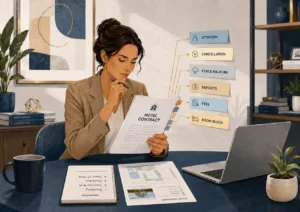
Contracts can either lock you in—or create a solid safety net. At CPS, we emphasize building in protective clauses early. During hotel negotiations, consider:
- A force majeure clause that covers today’s real risks: pandemics, travel bans, and staffing shortages.
- Attrition and cancellation terms that scale based on attendance.
- Rebooking language that allows you to move the event without losing deposits.
- A room and meeting space block review to ensure your contracted space still aligns with your evolving needs and registration trends.
Smart event contract negotiation is all about asking “what if?” before you sign.
3. Use Site Visits to Evaluate Real-World Flexibility
Site visits aren’t just about seeing the space—they’re about understanding how the venue will perform under pressure.
During walk-throughs, we always ask:
- How has the venue handled schedule changes or room flips for past clients?
- Can food and beverage service be scaled up or down with minimal notice?
- Is there overflow space available if a session draws a larger-than-expected crowd?
- Are there nearby partner properties for overflow rooms if the block fills unexpectedly?
- Can check-in/check-out times be adjusted to accommodate early arrivals or late departures for group blocks?
We think these conversations are key to selecting venues that can roll with the punches.
4. Choose Venues That Can Scale With Your Needs
Whether your event grows or tightens, your venue should flex with you. Look for:
- Room blocks with phased release dates to avoid attrition and give you flexibility as registration numbers firm up.
- Meeting spaces that expand or divide without added cost, so you’re not paying extra for layout changes.
- F&B minimums that reflect budget-conscious event planning, with options for custom menus to help you stay within limits while still offering a great experience.
- Flexible downsizing or upsizing clauses, ensuring you’re covered if attendance fluctuates, whether your event grows or shrinks.
🎯 With meeting budgets under pressure, scalability is one of the best tools in your toolkit.
👉 For more ideas on budget-friendly meetings read our recent article.
At Conference Planning Services, we specialize in venue sourcing and contract negotiation for organizations that host high-impact events. Our goal? To help you plan events that are not only successful—but resilient. We are always happy to chat about ideas or share more about how we approach venue sourcing – contact us.
We evaluate venues not just on looks or location, but on how well they support inclusive, flexible, and cost-effective gatherings. Check out this article on Tips for Managing Event Contracts in Challenging Times for more ideas on planning resilient events.