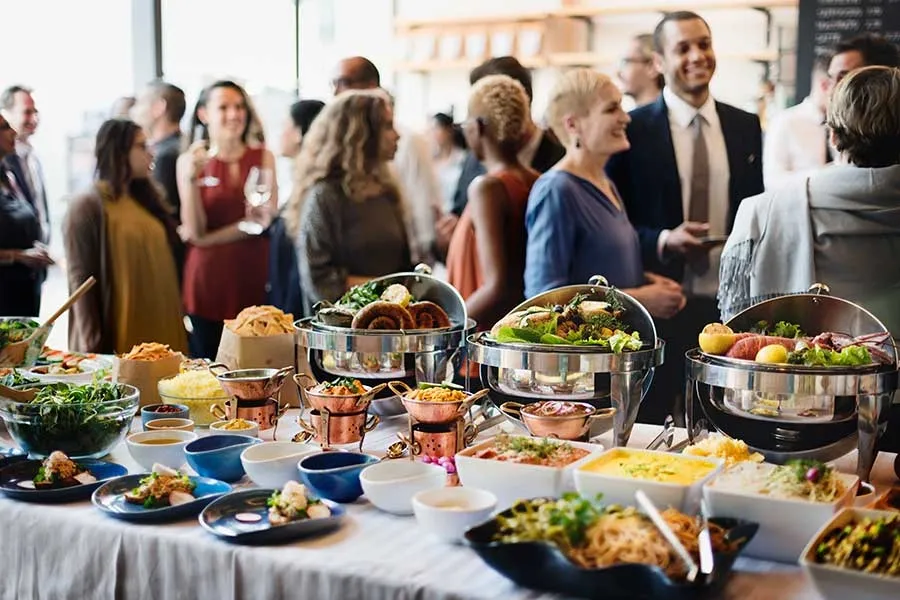
Food and beverage (F&B) costs at hotels continue to rise, and for planners, they can quickly eat up the largest portion of the budget. The good news? With a little creativity and proactive planning, you can deliver a great attendee experience while keeping costs under control. Here are some tried-and-true strategies we’ve used or seen in the field that actually work.
1. Rethink Your Menu Choices
- Simplify offerings: A streamlined buffet or a plated entrée choice is usually plenty. Attendees don’t need three entrée options at every meal.
- Repurpose: One of our favorite tricks is to serve the dessert that comes with lunch later in the day during the afternoon break. No one misses it at lunch, and it saves the cost of an extra break. Similarly, leftover whole fruit from breakfast can be refreshed and set out again at the mid-morning break. Small adjustments like this add up.
2. Be Strategic About Timing
- Rethink your schedule: If your sessions end by 11:30 a.m. or start after 1:00 p.m., you don’t need to provide lunch.
- Mix in “lunch on own”: For multi-day conferences, design one day where attendees grab lunch or breakfast independently. It adds flexibility to the agenda and saves significantly.
- Combine functions: We’ve seen groups combine coffee breaks with networking in the exhibit hall. Attendees focus more on exhibitors, and consumption is lower than at a stand-alone break.
3. Manage Portions and Waste
- Guarantee smartly: Only guarantee what you know will be eaten. At one conference, we tracked attendance over several years and learned that only about 50% of attendees actually eat breakfast. Planning for half the group instead of the full headcount saved costs without a single complaint.
- Ask during registration: Build meal sign-ups into your registration form so you know exactly who plans to attend each meal. This prevents over-ordering and keeps guarantees tight.
4. Negotiate with Hotels Upfront
- Custom menus: During contracting, negotiate flexibility to create menus tailored to your budget instead of being locked into standard banquet pricing. This is one of the most effective ways to control F&B spend.
- Discounted pricing: Ask for a 10–20% discount off menu pricing, or lock in today’s menu pricing for a future event. Both approaches can significantly reduce costs and protect you from inflation.
- Watch the add-ons: Service charges and tax can add 25-35% to your F&B costs. Get clarity before signing.
- Bundle packages: All-day packages (coffee + snacks + lunch) are sometimes less expensive than buying each element separately, depending on your group’s consumption.
Want to understand how tariffs and supply chain pressures are influencing hotel F&B pricing? This Hotel Dive article explains the direct impact on food costs and what meeting planners should watch for.
5. Get Creative with Beverages
- Coffee math: Don’t over-order coffee. For a 30-minute break, one cup per person is plenty. For a longer session, budget 1.5–2 cups. Hotels love to sell extra gallons, but in practice, much of it goes to waste.
- Pre-pour drinks: For plated meals, ask the hotel to set water and iced tea in advance. It saves you from paying for sodas or extra beverage service.
- Limit the bar: Instead of an open bar for hours, give attendees two drink tickets each. It still feels generous, but you cut down dramatically on consumption. We’ve even had sponsors brand the tickets to cover part of the cost.
- Signature options: Offer one specialty cocktail or house wine and beer. It’s cheaper than a full premium bar and still creates a fun experience.
6. Explore Alternative Food Experiences
- Sponsorship opportunities: Coffee breaks, ice cream socials, or snack stations are great sponsorship opportunities. A sponsor gets visibility, and your budget gets relief.
- Local flavor, on a budget: One hotel worked with us to bring in mini pies from a local bakery instead of plated desserts. It was a hit with attendees and far less expensive.
- Offsite dining: In some cases, using local restaurants or food trucks can be more cost-effective – and it gives attendees a taste of the destination.
7. Build Flexibility Into Contracts
- Negotiate realistic minimums: Don’t lock yourself into an inflated F&B minimum that forces you to overspend just to meet the number.
- Credit flexibility: Ask if spend from room service or in-house dining can be applied toward your F&B minimum. Hotels may not always agree, but pushing for flexibility ensures more of your dollars count toward the contracted minimum if attendance shifts.
Curious how broader industry shifts are impacting F&B and guest experience expectations? NetSuite’s 2025 Hospitality Industry Trends article outlines how personalization, labor, and tech innovation are shaping cost-conscious service strategies across the board.
Final Thought
At the end of the day, F&B is about balancing experience with cost. Attendees rarely notice if you swap a plated dessert for a snack break, or if lunch is “on your own” one day. What they do notice is how seamless the experience feels.
At Conference Planning Services (CPS), we help clients think through these strategies during the planning process and negotiate contracts that ensure F&B stays within budget. By tracking consumption, negotiating creatively, and rethinking the traditional meeting format, you can deliver a conference that feels abundant – without breaking the bank.