

As the cost of doing business continues to rise, event planners are under growing pressure to deliver high-impact meetings without breaking the budget. That pressure is especially acute when sourcing venues in Tier‑1 destinations like New York, San Francisco, or Chicago – cities long viewed as go-to hubs for conferences and corporate gatherings.
But the data is clear: the economics of hosting meetings in marquee markets are shifting. And savvy planners are looking elsewhere.
Welcome to the rise of the second-tier city.
The Cost Reality: More for Less, or Less for More?
According to the 2025 CWT GBTA Global Business Travel Forecast, average daily attendee costs are expected to reach $169/day – almost double the 2021 average of $88/day. Hotel rates and airfare are still climbing, albeit at a slower pace, and even well-run meetings are feeling the pressure of inflation-driven cost creep.
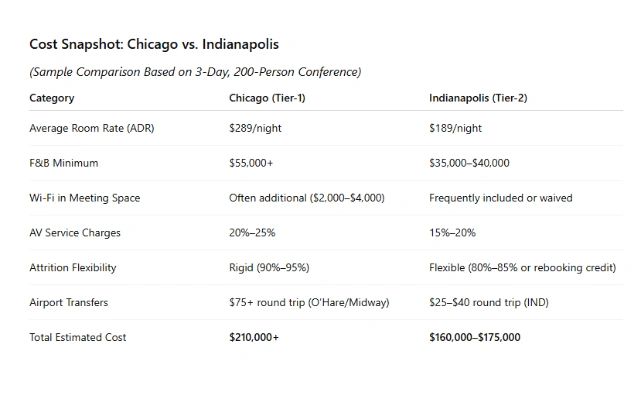
In high-demand cities like Chicago, planners face a triple threat:
- High ADRs (Average Daily Rates) with limited room block flexibility
- Premium pricing for food & beverage, AV, and service
- Limited negotiating power during peak seasons
In contrast, cities like Tulsa, Indianapolis, or Raleigh offer:
- Competitive room rates
- Lower service charges and fees
- Modern, renovated meeting facilities
- More room to negotiate creative concessions
What Planners Are Gaining in Smaller Markets
For one national association, moving their annual summit from Chicago to Indianapolis cut event costs by 25% – with attendees rating the experience higher than in previous years.
It’s not just about saving money. It’s about unlocking value. Here’s what planners are gaining in second-tier cities:
Budget Flexibility
In markets where demand is less saturated, your dollar goes further – not just on sleeping rooms, but on the total event experience. Want upgraded coffee stations? Lounge furniture? Wi-Fi included in the rate? In smaller cities, those requests are more likely to be bundled in.
Contract Leverage
A property in Chicago might offer rigid attrition and cancellation clauses. But a property in Indianapolis might be more open to flexible terms, rebooking credits, or add-on value. That gives planners wiggle room if attendance shifts or if travel policy changes last-minute.
Easier Access Than You Think
Tulsa may not have the global name recognition of Boston or LA but cities like it often have major airline service, vibrant downtowns, and walkable venues that reduce local transport costs. And when your attendees aren’t fighting the crowds at large airports, their experience improves too.
A Fresh Take on “Destination Appeal”
Smaller markets bring a layer of novelty that can reignite attendee engagement. The “been-there, done-that” effect is real, and it’s harder to generate excitement for yet another meeting at the same downtown hotel. Indy’s sports-meets-tech culture or Tulsa’s art deco charm might be exactly what your event needs to stand out.
The Strategic Shift: Not Just About Cost
This isn’t just a budget play – it’s a resilience play. With economic uncertainty and shifting attendance trends, planners need flexible contracts, scalable venues, and contingency-friendly markets.
In its 2025 forecast, GBTA noted that while many buyers expect higher spend, nearly one-third also expect less travel volume due to policy constraints and changing corporate strategies. That disconnect makes predictability more valuable than ever.
By turning to second-tier cities, planners gain not only cost advantages but operational flexibility – the kind that makes it easier to adjust dates, room counts, or meeting formats on the fly.
Smaller Markets Require a Bit More Homework
While smaller cities present exciting opportunities, they also require a thoughtful approach. Here’s what to keep in mind:
- Air access: Ensure major carriers and connections support your attendee base.
- Local labor capacity: Smaller markets may have leaner AV or F&B staffing – ask early!
- Cultural fit: Make sure the vibe of the destination aligns with your group’s expectations.
Planners who approach second-tier sourcing with curiosity and context often discover these markets are more than capable – they’re quietly redefining what successful meetings look like.
The Map Is Changing
Prestige markets will always have their place. But the meetings that drive ROI in the coming decade, according to the Global Business Travel Forecast, 2040: Baseline, Boom, or Bust, will be the ones planned with strategy, agility, and fiscal clarity.
You don’t need to sacrifice quality to find value. Sometimes, you just need to shift your coordinates.
So maybe next time, it’s not Chicago. Maybe it’s Indy.
And maybe it’s your best event yet.
Curious about exploring new destinations for your next event?
We’re always happy to share insights, compare markets, or help you think through the sourcing strategy that fits your goals. Reach out to Conference Planning Services and let’s talk through what’s possible.